
What to Actually Ask AI Video Analytics Companies Before Signing a Deployment Contract
- June 3, 2026
- Posted by:
- Categories: Articles, Articles & Blogs, Blogs
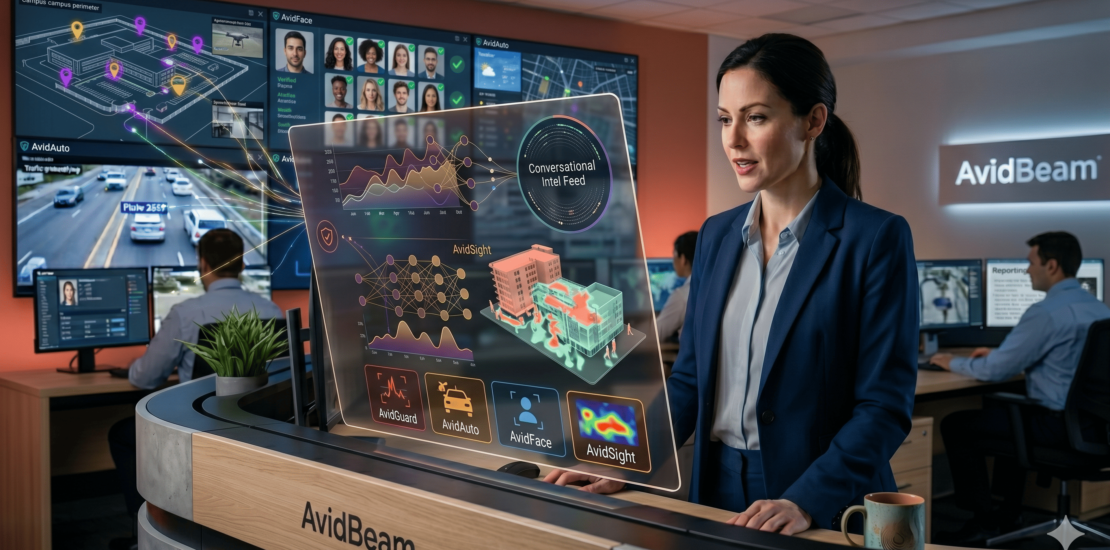
The market for AI video analytics companies has expanded faster than the terminology has caught up. Most vendors in the space describe their offering as AI-powered. The feature lists look similar at a glance. The architecture differences, the accuracy figures under real operating conditions, and the depth of integration across security and operational use cases do not appear in the product brochure. They appear in the deployment, usually after the contract is signed.
The evaluation problem for facility managers, infrastructure directors, and security operations leaders is not identifying which companies claim to offer AI video analytics. It is identifying which companies actually deliver it, at scale, across the environmental conditions their facilities produce, on the camera infrastructure already in place, with a deployment record in comparable environments that can be verified rather than taken on faith.
This article sets out the criteria that separate AI video analytics companies that deliver operational intelligence from those that deliver recording infrastructure with analytics branding. It then examines where AvidBeam stands against each criterion, with specific reference to the deployments, accuracy figures, and platform architecture that back the claim.
What Actually Separates AI Video Analytics Companies
Three architectural distinctions determine the operational ceiling of any AI video analytics platform. They are not visible in feature comparisons or demo environments. They become visible when the platform is running at scale, across real facility conditions, on a camera network that was not purpose-built for the analytics layer being deployed on top of it.
Recording Infrastructure vs. Operational Intelligence
The dominant model among AI video analytics companies is still camera-centric: more cameras, higher resolution, longer storage retention. None of those factors produces a single automated detection without an analytics layer that acts on what the cameras see. The operational problems that a hardware-only or recording-first model leaves unresolved are consistent across facility types:
- Cameras record continuously but generate no alerts unless a separate detection system triggers
- Perimeter monitoring depends on guard patrols and control room attention, both subject to fatigue, shift gaps, and attention limits
- Access violations, such as tailgating, are invisible to badge systems and require human observation to catch
- Post-incident investigation means hours of sequential footage review across dozens of camera feeds
An AI video analytics company that addresses these gaps delivers an operational intelligence platform. One that does not delivers a recording infrastructure, which is a different product, regardless of how the marketing frames it.
Edge-Based vs. Server-Based Architecture
AI video analytics companies split into two architectural camps, and the choice determines the quality ceiling of every detection the platform generates. Edge-based analytics processes video locally at each camera or gateway device. That architecture imposes hard compute limits per unit, which means detection model complexity, accuracy under adverse conditions, and the ability to update capabilities without hardware replacement are all constrained by what individual camera hardware can offer.
Server-based analytics processes all video feeds through a centralized infrastructure. The consequences of that architecture compound at scale: detection models run at the same accuracy level across 10 cameras or 500, new capabilities deploy through software across every connected camera simultaneously, and any ONVIF-compliant camera already on the network becomes part of the analytics layer without hardware replacement at individual points.
The architecture question is worth asking directly in any evaluation: where does the detection processing happen, and what does that mean for accuracy consistency across low-light, adverse weather, and high-density traffic conditions?
Single-Product vs. Integrated Multi-Suite Platforms
Many AI video analytics companies deliver strong capability in one domain, perimeter detection, or license plate recognition, or retail analytics, and limited or absent capability in others. For facilities that require security, identity verification, vehicle management, and operational analytics to run in a unified view, a collection of single-purpose tools from different vendors creates integration complexity, inconsistent data formats, and investigation workflows that require navigating separate interfaces per detection type.
An integrated multi-suite platform covers all operational layers through one management interface, one investigation query layer, and one deployment architecture. The distinction matters most at the post-incident investigation stage, when a security team needs to cross-reference behavioral alerts, identity records, and vehicle data from the same incident window without switching systems.
The Eight Criteria That Matter in an AI Video Analytics Evaluation
The evaluation criteria below are the questions that separate AI video analytics companies that deliver measurable operational returns from those that deliver feature lists. Each criterion targets a specific architectural or deployment dimension that does not appear in product demos but determines the value of the platform in production.
- Analytics depth: Does the platform detect behavioral events such as loitering, tailgating, crowd density deviation, and zone access anomalies, or only motion? Motion detection is not AI video analytics.
- Hardware compatibility: Does deployment require replacing existing cameras, or does the analytics layer connect to ONVIF-compliant infrastructure already in place? The answer determines whether the total cost of deployment is the software license or the software license plus a full camera replacement program.
- Deployment flexibility: Are on-premise, private cloud, public cloud, and hybrid configurations available? Facilities with data sovereignty requirements need local processing without external transmission; cloud-first platforms may not accommodate this.
- Verified deployments at scale: has the vendor deployed across mass-attendance events, government facilities, industrial sites, and hospitality environments? A deployment record in comparable environments is the only evidence that matters at this stage; case studies from dissimilar contexts do not transfer.
- Post-incident investigation capability: Does the platform compress investigation from hours to minutes through query-based retrieval, or does evidence collection still depend on manual footage review? The difference is the presence or absence of a natural-language investigation layer.
- Multi-suite integration: Does the platform cover security, identity, vehicle intelligence, retail analytics, and investigation in one unified interface, or does each capability require a separate product from a separate vendor?
- GenAI and natural-language capability: Does the platform support conversational queries and automated insight reporting, or is analytics output locked inside dashboards that require technical staff to interpret?
- Accuracy under real conditions: Does detection performance hold up at night, in adverse weather, and under high-speed or high-density traffic conditions? Accuracy figures from controlled test environments do not predict performance at 02:30 in fog on a highway approach.
AvidBeam: What the Platform Actually Delivers
AvidBeam positions itself as a server-based AI video analytics platform — not a camera vendor, not a recording infrastructure provider, and not a single-purpose detection tool. Five integrated product suites cover the full operational spectrum from behavioral threat detection through commercial analytics and natural-language investigation, all running on the camera infrastructure organizations already have in place. Each suite targets a distinct operational layer, and all five connect through a single management interface.
AvidGuard: Behavioral Threat Detection
AvidGuard establishes a behavioral baseline for each monitored zone and generates alerts for activity that deviates from it, a fundamentally different approach from motion detection, which fires on anything that moves. Detection events span loitering, intrusion, tailgating, crowd density anomalies, left object detection, scene change detection, PPE compliance verification, and fire and smoke detection. N+1 redundancy maintains continuous monitoring coverage despite hardware failures. False-positive rates stay at a level where security teams maintain consistent response discipline rather than learning to ignore the alert layer.
AvidFace Identity Verification and Access Intelligence
AvidFace delivers facial recognition at over 90% accuracy at entry points, sustained across partial face obstructions, non-frontal angles, and variable lighting conditions. Watchlist management covers deny lists, allow lists, and VIP lists running in parallel across every monitored access point simultaneously. Zone-level movement tracking surfaces identity-based anomalies, individuals present in zones outside their authorization profile, automatically and without a pre-written rule to catch the specific event. Image-based historical search compresses post-incident identity investigation from hours to minutes.
AvidAuto, Vehicle Intelligence
AvidAuto covers the full vehicle intelligence stack through three integrated products. AB – Vehicle Analytics delivers LPR at 98%+ accuracy for Arabic plates and 92%+ for English, with real-time watchlist cross-referencing at every monitored gate and road segment. AB – ITS covers traffic violation detection, wrong-way driving, red-light violations, lane switching, illegal parking, mobile phone, and seatbelt detection. AB – Smart Parking handles occupancy visibility, double-parking detection, and entrance and exit blocking alerts across all monitored parking areas.
AvidSight Commercial and Retail Analytics
AvidSight applies the same server-based video analytics architecture to commercial intelligence: heatmaps, customer pathway analysis, dwell time measurement, occupancy management, and predictive traffic forecasting for retail environments; ATM violation detection, employee presence monitoring, unattended cash detection, and vault access policy enforcement for banking environments. Both modules run on existing surveillance cameras without specialized retail hardware, which means retail and banking organizations extend commercial intelligence to the camera network already in place.
AvidGenAI The Natural-Language Intelligence Layer
AvidGenAI is a Vision Language Model that converts video footage into natural-language text and enables conversational queries across the full platform. Post-incident investigation that previously required hours of manual footage review across dozens of feeds becomes a minutes-long query. Operations staff without technical analytics backgrounds query the full camera network in plain language and receive timestamped, contextual results. Automated KPI reports and insight summaries are generated from video observations across all connected suites without manual data aggregation.
AvidBeam’s Full Suite Breakdown
The table below maps each AvidBeam product suite to its operational layer, core capabilities, and the environments where it delivers the most direct return.
| Suite | Operational Layer | Core Capabilities | Primary Environments |
|---|---|---|---|
| AvidGuard | Behavioral threat detection | Intrusion, loitering, tailgating, crowd density, PPE compliance, fire and smoke, scene change, left object | Facilities, perimeters, industrial sites, events |
| AvidFace | Identity verification and access control | Facial recognition at 90%+; watchlist management; zone movement tracking; VIP recognition; image-based forensic search | Buildings, government, hospitality, banking, mass events |
| AvidAuto | Vehicle intelligence | LPR at 98%+ (Arabic) / 92%+ (English); gate access control; traffic violation detection; smart parking management | Roads, gates, logistics, oil and gas, parking structures |
| AvidSight | Commercial and retail analytics | Heatmaps, pathway analysis, dwell time, occupancy management, queue monitoring, ATM and vault compliance | Retail chains, bank branches, commercial properties |
| AvidGenAI | Natural-language investigation and reporting | Vision Language Model; video-to-text scene descriptions; conversational query across all suites; KPI report generation | All environments; post-incident investigation; operations reporting |
Verified Deployments: The Evidence That Matters
A deployment record is the only evidence in an AI video analytics evaluation that cannot be manufactured. Feature lists can be padded. Demo environments can be controlled. A documented deployment at scale, in a comparable environment, under real operational conditions that is what separates a vendor with a product from a vendor with a proven platform. AvidBeam’s deployments span five environment categories that cover the full range of operational contexts where AI video analytics companies are evaluated.
Mass Events
Soundstorm 2024 and 2025, Riyadh: AvidBeam deployed crowd management, facial recognition, demographics detection, and people counting across two consecutive editions, 450,000+ attendees per edition, 150+ artists, and three days of continuous multi-zone monitoring. BaladBeast, Jeddah 2025: facial recognition, crowd management, and people counting across a two-day festival in Jeddah’s historic Al-Balad district, featuring 70+ artists across four stages in a heritage urban environment with constrained sightlines.
Government and High-Security
Ministry of Foreign Affairs, Saudi Arabia: AvidFace for visitor identification and zone tracking, AvidGuard for perimeter and zone intrusion detection with dynamic watchlist alerts, and AvidAuto for vehicle access control at all entry points, all three suites running in parallel across a high-security government environment. KAPSARC: AvidFace and AvidGuard were deployed across the King Abdullah Petroleum Studies and Research Center for personnel tracking, early-warning anomaly alerts, and traffic violation detection.
Hospitality
Four Seasons Hotel, Madinah: AvidFace and AvidAuto running in combination across all property access points, blacklist, whitelist, and VIP recognition for guests and vehicles simultaneously, with identity and vehicle tracking at every entrance without disrupting guest flow. A hospitality deployment that required both the guest experience layer and the security layer to operate through the same platform without operational friction between them.
Industrial and Energy
SABIC petrochemical facilities, Saudi Arabia: AvidGuard’s PPE compliance verification module deployed across petrochemical facilities to enforce safety regulations through automated video analysis, verifying helmets, face masks, gloves, safety shoes, ear protection, vests, glasses, and hairnets continuously without manual supervisor presence at every monitored zone.
Entertainment Destinations
Qiddiya, Saudi Arabia 2024: AvidFace for blacklist, whitelist, and VIP recognition across the entertainment destination’s facilities; AvidAuto for vehicle count, license plate recognition, and access control at all site entrances, a multi-zone entertainment deployment requiring both identity and vehicle intelligence layers operating simultaneously.
Evaluation Criteria vs. AvidBeam Full Comparison
The table below maps each of the eight evaluation criteria directly against AvidBeam’s platform, providing a structured reference for organizations currently evaluating AI video analytics companies against a defined set of operational requirements.
| Evaluation Criterion | What to Ask | AvidBeam’s Answer |
|---|---|---|
| Real-time monitoring | Does the platform operate in an active, real-time timestamp? | AvidBeam’s product suite of video surveillance is powered by AI and the latest technologies to monitor camera feeds in real-time. |
| Analytics depth | Does the platform detect behavioral events — loitering, intrusion, crowd density — or only motion? | AvidGuard delivers behavioral analysis per zone with configurable thresholds; not motion detection |
| Hardware compatibility | Does deployment require replacing existing cameras, or does the platform layer onto ONVIF-compliant infrastructure already in place? | AvidBeam layers onto any existing ONVIF-compliant camera; 2GB RAM / 2.4 GHz per camera minimum |
| Deployment flexibility | Are on-premise, private cloud, public cloud, and hybrid options available? | All four deployment models available; data sovereignty requirements accommodated without platform compromise |
| Verified deployments at scale | Has the vendor deployed across mass events, government facilities, industrial sites, and hospitality environments? | Soundstorm 450,000+ attendees; Ministry of Foreign Affairs; SABIC; Four Seasons; KAPSARC — all documented |
| Investigation capability | Can post-incident investigation compress from hours to minutes, or does evidence collection still depend on manual footage review? | AvidGenAI natural-language query across the full camera network; timestamped results in minutes per incident |
| Multi-suite integration | Does the platform cover security, identity, vehicle, retail, and investigation in one unified interface? | Five integrated suites — AvidGuard, AvidFace, AvidAuto, AvidSight, AvidGenAI — through one management interface |
| GenAI layer | Does the platform support natural-language queries and automated insight reporting? | AvidGenAI converts detections to natural-language intelligence; queryable by operations staff without technical training |
| Accuracy under real conditions | Does detection hold up at night, in adverse weather, and under high-speed or high-density traffic? | Server-based processing maintains consistent accuracy regardless of individual camera hardware capacity |
The criteria above are not a checklist designed around AvidBeam’s feature set. They are the questions that any facility manager or infrastructure director should be asking of every AI video analytics company in an active evaluation, and the answers are where the operational difference between vendors becomes visible.
Infrastructure and Deployment
AvidBeam’s platform processes all video analytics at the server level on existing camera infrastructure. The deployment path starts with the cameras already in place, no hardware replacement required for ONVIF-compliant networks, and the analytics capability scales through software as the deployment grows.
The infrastructure baseline per camera processed:
- 2GB RAM minimum
- One virtual core at 2.4 GHz minimum; multiple GPU configurations supported for higher-density deployments
- Camera resolution: 2MP up to 4K; lens focal length 3mm to 25mm
- Pitch -15° to +15°; roll -180° to +180°; yaw -15° to +15°
VMS integration covers Milestone, NetworkOptix, and Genetec platforms. Deployment options, on-premise, private cloud, public cloud, or hybrid, are configurable based on data governance and operational requirements. For government and high-security facilities, on-premise processing keeps all detection data and footage local without external transmission.
For multi-site organizations, the same watchlist infrastructure, detection rule sets, and management interface extend across every new location as it comes online, without per-site reconfiguration and without separate platform deployments for each facility in the portfolio.
Frequently Asked Questions
What do AI video analytics companies actually do?
They apply AI and computer vision models to live camera feeds to extract real-time detections, alerts, identity records, vehicle intelligence, and operational analytics, rather than recording footage for manual review after the fact.
What is the most important criterion when evaluating AI video analytics companies?
Verified deployments in comparable environments, feature lists and demo performance are controllable; a documented deployment record at scale in a similar operational context is not.