
PPE Meaning and AI Detection: The Future of Workplace Safety
- September 16, 2025
- Posted by:
- Categories: Articles, Articles & Blogs
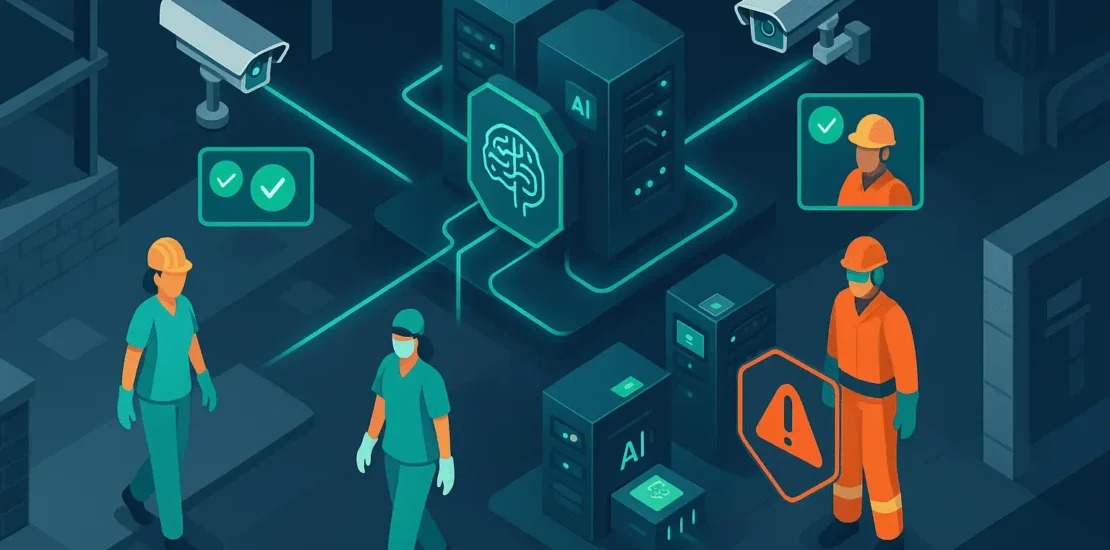
Three letters save lives daily. PPE meaning transcends simple workplace jargon; it represents humanity’s shield against invisible killers lurking in factories, hospitals, and construction sites worldwide. PPE stands for Personal Protective Equipment.
Every morning, millions of workers around the globe put on equipment that could determine a lot, safety-wise. PPE meaning is far more than workplace terminology. They symbolize the difference between life-altering injuries and another normal day at work.
Personal protective equipment (PPE) stands as humanity’s first line of defense against workplace hazards that claim thousands of lives annually. Yet here lies a troubling paradox. While organizations spend billions annually on protective equipment, workplace injuries continue to devastate families and destroy businesses.
The problem isn’t understanding what PPE stands for. Most workers know protective equipment exists. The challenge lies in ensuring consistent usage when supervisors aren’t watching, when comfort matters more than safety, and when “just this once or it’s an easy task or no need for this helmet” becomes a deadly habit.
The coming lines will explore PPE meaning across industries and reveal how cutting-edge detection technology transforms workplace safety forever. Traditional protective equipment remains essential, but intelligent monitoring systems now ensure workers actually wear their gear correctly and consistently.
PPE Meaning and Definition
The World Health Organization defines this equipment as specialized gear engineered to prevent or minimize hazardous exposures (WHO).
Without proper PPE implementation, workers face devastating consequences. Injuries escalate. Illnesses spread. Fatalities occur across countless industries, such as:
- Biological contaminants (viruses, bacteria, infectious materials).
- Chemical toxins (corrosive substances, poisonous vapors).
- Radiation exposure (electromagnetic fields, nuclear particles).
- Electrical dangers (shock hazards, electrocution risks).
- Mechanical injuries (crushing forces, sharp objects).
Industrial PPE Applications & Sector-Specific Protection
Different industries demand unique protective strategies. Here are quick PPE industry breakdown:
| Sector | Primary Hazards | Essential PPE |
| Construction | Impact, falls, electrical | Hard hats, harnesses, steel-toe boots |
| Mining | Dust, noise, crushing | Respirators, hearing protection, helmets |
| Chemical | Toxic exposure, burns | Full suits, chemical gloves, face shields |
| Healthcare | Biological, sharps | Masks, gowns, safety glasses, gloves |
Healthcare PPE as A Life-Saving Barrier
Medical environments showcase PPE meaning most dramatically. The FDA characterizes personal protective equipment as “protective clothing, helmets, gloves, face shields, goggles, facemasks and/or respirators or other equipment designed to protect the wearer from injury or the spread of infection or illness” (FDA).
Hospitals transform into battlegrounds against invisible enemies. PPE creates impenetrable fortresses between healthcare warriors and deadly pathogens. Blood splatters. Respiratory droplets fly. Contaminated surfaces threaten everyone.
When deployed correctly, protective barriers shield skin, mucous membranes, and respiratory pathways from infectious materials. Patients benefit too; vulnerable individuals with compromised immunity gain protection from external contaminants carried by visitors and medical staff.
Also can learn more about: Personal Safety Equipment
Personal Protective Equipment (PPE) Compliance Crisis
Understanding PPE meaning solves nothing without consistent application. Statistics reveal the truth: 61,663 employee non-fatal injuries reported by employers in 2023/24 (HSE).
Workers remove uncomfortable hard hats. Masks slip during intensive procedures. Gloves disappear for “just a moment” of delicate work, and the fleeting lapses create hazardous traps.
Video Analytics Solutions: From Basic PPE to Intelligent Detection
Modern safety demands exceed human oversight capabilities. Supervisors cannot monitor thousands of workers simultaneously across sprawling facilities.
Smart detection systems revolutionize workplace protection, and market analysts project explosive sector growth, from $82.87 billion in 2025 to $156.51 billion by 2034 (Market Research Future, 2025).
Also you can learn more about: Personal Protective Equipment Detection
Server-Based Analytics and PPE Detection
Powerful servers transform ordinary security cameras into intelligent safety sentries. Unlike passive surveillance systems, advanced analytics processes multiple video streams through AI algorithms trained specifically for PPE recognition patterns.
The technology analyzes visual signatures: distinctive colors, geometric shapes, reflective materials, and precise equipment positioning on workers’ bodies. Violations trigger instantaneous notifications to supervisors and safety personnel.
Server-Based Video Analytics Architecture Advantages:
- Centralized processing handles unlimited camera feeds.
- Scalable infrastructure accommodates any facility size.
- Remote monitoring enables multi-location oversight.
- Historical data tracking reveals compliance trends.
AvidBeam Solutions: Pioneering Intelligent PPE Detection
AvidBeam Technologies leads the server-based detection revolution through its flagship AvidGuard platform, the comprehensive AI-powered system that specializes in workplace safety monitoring with unprecedented accuracy. AvidGuard recognizes diverse protective equipment across anatomical zones.
The system operates efficiently on standard hardware, just 2GB of memory per camera with 2.4GHz processing power. Implementation costs remain minimal while delivering enterprise-grade performance.
AvidGuard Solution
AvidGuard transcends simple PPE recognition through integrated safety features addressing multiple workplace hazards at the same time.
- Fire and Smoke Recognition: Advanced algorithms identify combustion signatures through visual pattern analysis. Shape changes, color variations, and smoke movement trigger immediate emergency alerts.
- Behavioral Anomaly Detection: System intelligence recognizes normal operational patterns and then flags unusual activities, suggesting potential safety concerns. Problems get identified before accidents occur.
- Access Control Integration: Unauthorized personnel attempting entry into restricted zones trigger instant security notifications. Only properly equipped workers gain access to dangerous areas.
- Crowd Density Monitoring: Occupancy levels receive continuous tracking, preventing overcrowding situations that compromise emergency evacuation procedures.
AvidGuard’s Deployment Flexibility
AvidBeam‘s server-based architecture accommodates diverse implementation requirements through flexible configuration options. Existing Video Management Systems integrate. Milestone and Genetec compatibility eliminates costly infrastructure overhauls.
Success Stories: AvidBeam in Action
Real-world deployments prove technology effectiveness across demanding industrial environments.
- SABIC’s Saudi Arabian facilities utilize AvidGuard for comprehensive safety regulation enforcement among thousands of workers.
- Egyptian chemical processing giant ADNOC-EFC implemented the system throughout their hazardous material handling operations.
- MARS Factory Egypt deployed detection capabilities across designated safety zones. Worker compliance improved dramatically following automated monitoring implementation.
Business Case for Smart PPE Detection
Workplace injuries devastate organizational finances annually. Recent data reveals staggering costs: $176.5 billion in total expenses, including $53.1 billion in lost productivity, $36.8 billion in medical treatment, and $59.5 billion in administrative overhead (NSC, 2023).
Server-based detection systems deliver measurable returns through:
- Injury Rate Reduction – Fewer accidents mean lower medical costs.
- Insurance Premium Savings – Improved safety records reduce coverage expenses.
- Productivity Enhancement – Less accident downtime boosts operational efficiency.
- Regulatory Compliance – Avoid costly fines and legal liability.
- Worker Confidence – Visible safety commitment improves morale.
Where PPE Meaning Meets Artificial Intelligence
Today’s safety landscape integrates traditional protective equipment with predictive intelligence systems. Understanding PPE meaning represents just the foundation; smart detection technology builds comprehensive protection ecosystems.
Machine learning algorithms continuously improve recognition accuracy through operational experience. Pattern recognition evolves. False positive rates diminish. Detection capabilities expand across new equipment types and industrial applications.
Workplace safety transforms from reactive incident response toward predictive risk management. Hazards get identified before exposure occurs. Interventions happen automatically. Prevention replaces treatment as the primary safety strategy.
Also you can learn more about: PPE Safety Equipment
Key Takeaways
- Personal Protective Equipment (PPE) encompasses specialized gear that prevents exposure to biological, chemical, radiological, electrical, and mechanical hazards.
- Brief moments of non-compliance generate vulnerability windows where accidents frequently happen.
- Server-based video analytics provide continuous monitoring across unlimited locations.
- AvidBeam’s AI-powered systems identify PPE violations within seconds of occurrence.
- Workplace injury costs total $176.5 billion annually, including medical expenses, lost productivity, and administrative overhead.
- Integration with existing Video Management Systems eliminates costly infrastructure overhauls.