
Personal Safety Equipment: Complete Guide to Workplace Protection and Smart Detection
- August 28, 2025
- Posted by:
- Categories: Articles, Articles & Blogs
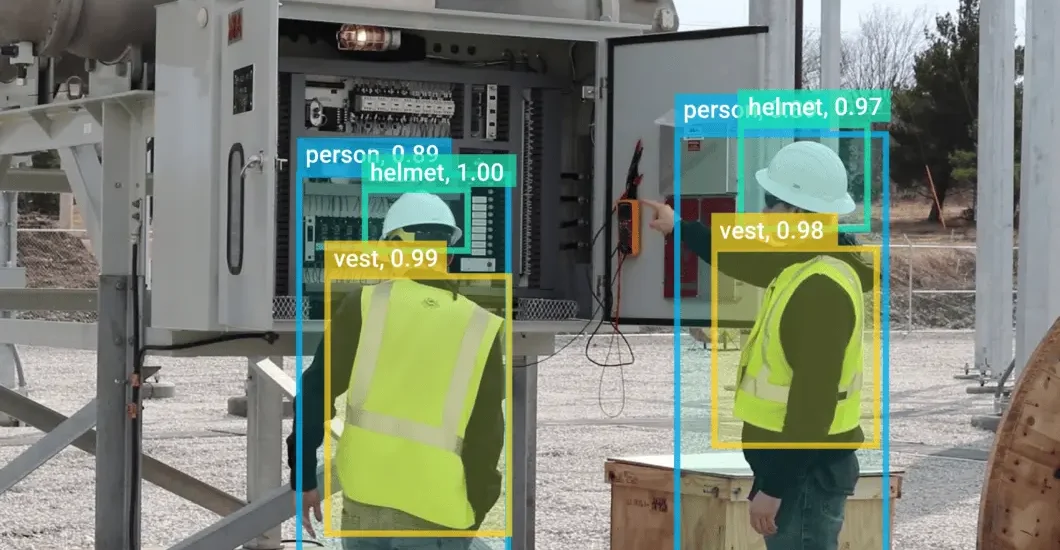
Workplace accidents cost businesses billions of dollars annually. To combat this exorbitant cost, personal safety equipment, AKA personal protective equipment (PPE), plays a vital role as the first line of defense against injuries. However, this equipment alone does not guarantee protection. Workers must wear the equipment correctly and consistently, and companies and organizations must invest in video analytics systems to raise safety compliance standards.
The National Safety Council documented $176.5 billion in total injury costs during 2023 (NSC). Lost wages and productivity consumed $53.1 billion of this amount. Medical expenses added another $36.8 billion. Administrative costs contributed $59.5 billion more.
What Is Personal Safety Equipment?
Simply, personal safety equipment includes all wearable equipment designed to protect workers from workplace hazards. By law, these tools are required in workplaces worldwide where workers are present (such as factories, the construction sector, etc.).
Market data indicates the importance of personal safety equipment (PPE), as the market is witnessing strong growth. The protective equipment market will reach $104.3 billion by 2027, then climb to $110.4 billion in 2028 (Market.us, 2025). This growth reflects increasing safety awareness across industries worldwide.
Here are some of the personal safety equipment categories and applications:
| Equipment Category | Primary Purpose | Common Examples |
| Respiratory Protection | Prevents inhalation of hazardous substances | Respirators, masks, breathing apparatus |
| Eye Protection | Shields against debris, chemicals, and radiation | Safety glasses, goggles, face shields |
| Hearing Protection | Reduces harmful noise exposure | Earplugs, earmuffs, noise-canceling devices |
| Head Protection | Guards against impacts and falling objects | Hard hats, bump caps, safety helmets |
| Hand Protection | Prevents cuts, burns, and chemical exposure | Cut-resistant gloves, heat-resistant gloves, chemical gloves |
| Foot Protection | Shields from crushing and puncture injuries | Steel-toe boots, slip-resistant shoes, and chemical boots |
| Body Protection | Defends against chemicals and extreme conditions | Coveralls, aprons, full-body suits, lab coats |
| Fall Protection | Prevents injuries from height-related falls | Safety harnesses, lanyards, lifelines |
Choosing Reliable Personal Safety Equipment Suppliers
Most procurement guides treat safety equipment like office supplies. They’re not. When a respirator fails or a harness snaps, people get hurt, and it’s a big deal. That reality shapes how experienced safety managers choose their suppliers.
Reputation Goes Beyond Online Reviews
Customer reviews matter, but they tell only part of the story. Smart buyers dig deeper. They check how long suppliers have operated in specific markets. They ask about warranty claim resolution times. And want to know what happens when equipment fails in the field.
Social media complaints often reveal more than five-star testimonials. Look for patterns in negative feedback. Does the same problem surface repeatedly? How does the supplier respond to criticism?
The Single-Source Advantage
Managing multiple suppliers can create headaches that many companies underestimate. Different ordering systems, varying lead times, incompatible equipment standards.
One supplier handling the entire safety program means consistent quality standards across all equipment categories.
Certifications Aren’t Paperwork
Every piece of safety equipment should carry proper certifications for your industry and location.
Legitimate suppliers provide detailed documentation without being asked. They understand compliance requirements and keep current with changing standards.
Essential Safety Equipment Supplier Selection Checklist
When evaluating potential suppliers, use this checklist to ensure you choose the right partner:
Reputation and Credibility
- Check Google ratings and online reviews
- Verify social media presence and customer feedback
- Request references from similar industry clients
- Research company history and market presence
Product Quality and Range
- Confirm comprehensive product selection
- Verify quality certifications and standards compliance
- Test sample products before bulk orders
Service and Support
- Evaluate pre-sales technical consultation quality
- Review warranty terms and conditions
- Assess return policy flexibility
- Test customer service response times
Pricing and Value
- Compare the total cost of ownership, not just unit prices
- Understand payment terms and financing options
Compliance and Documentation
- Request all relevant safety certifications
- Obtain product specification sheets
Also you can learn more about: Safety equipment suppliers
Smart Detection Technology Transforms Safety Management
Traditional safety oversight has critical limitations. Human supervisors cannot monitor every worker across multiple locations at the same time, yet these things happen:
- Workers remove hard hats for comfort.
- Masks slip during procedures.
- Gloves get set aside for delicate tasks.
These brief moments create dangerous vulnerability windows.
Here is where advanced PPE detection solutions come in, revolutionizing safety compliance monitoring. The detection technology sector shows explosive growth potential, expanding from $82.87 billion in 2025 to $156.51 billion by 2034 (Market Research Future, 2025). This growth reflects increasing demand for automated safety solutions.
Smart sensors integrated with Internet of Things technology elevate protective equipment from passive shields to active guardians. The video analytics systems collect environmental data, worker biometrics, and equipment status information, and software-based solutions monitoring platforms process this data to create comprehensive safety pictures.
Key Benefits of Automated Safety Detection
AI-powered systems maintain constant monitoring across unlimited locations without shift changes or attention lapses. Human fatigue never affects advanced personal safety equipment (PPE) detection solutions, making them ideal for organizations with thousands of workers spread across multiple sites.
Immediate response capabilities offer another crucial benefit. When violations occur, customizable alarms sound instantly. Security personnel receive real-time notifications. This fast response minimizes the time workers remain exposed to dangerous conditions. Remember: Every second counts during safety emergencies.
PPE Safety Equipment (PPE) detection solutions capabilities allow compatibility with existing infrastructure. Organizations avoid costly complete system overhauls while gaining sophisticated detection benefits. Leading Video Management Systems (VMS) like Milestone and Genetec work directly with modern detection platforms. So, implementation becomes straightforward and cost-effective.
AvidGuard: Advanced AI-Powered Safety Detection
AvidBeam Technologies developed AvidGuard as a video analytics solution for workplace safety. The system offers specialized modules for different environments across various industries worldwide.
AvidGuard‘s Personal Protective Equipment Detection analyzes video footage to identify required safety equipment. The system recognizes hard helmets, goggles, gloves, and high-visibility vests through advanced computer vision. Colors, shapes, and visual indicators confirm proper equipment usage. When violations occur, immediate alerts notify security personnel and supervisors.
- Face Mask Detection ensures compliance with health protocols by analyzing footage and confirming proper mask usage before granting facility access. The feature proved invaluable during pandemic conditions and continues supporting health-focused workplaces.
- Smoke and Fire Detection provides early warning capabilities using AI-powered analytics. The system identifies potential emergencies through shape, movement, and color pattern analysis. Early detection saves lives and prevents property damage through faster emergency response.
- Anomaly Detection recognizes normal workplace patterns and flags unusual activities that may indicate safety concerns. This proactive approach identifies problems before they become accidents.
AvidBeam’s Real-World Success Stories
AvidBeam systems demonstrate proven effectiveness across diverse sectors throughout the Middle East and North Africa. Here are some examples:
- SABIC in Saudi Arabia uses AvidBeam technology to enforce health and safety regulations through personal safety equipment/PPE detection. Worker compliance improved significantly after implementation.
- MARS Factory in Egypt monitors employee presence at designated safety zones using the detection system. ADNOC-EFC Factories in Egypt ensure worker safety through continuous PPE monitoring capabilities.
- Sound Storm 2024 in Riyadh showcased the system’s scalability by managing crowd safety for over 450,000 attendees. The largest Middle East music festival relied on AvidGuard for comprehensive security monitoring throughout the event.
3 Comments
Comments are closed.
[…] Also you can learn more about: Personal safety equipment […]
[…] Also can learn more about: Personal Safety Equipment […]
[…] team deployed AvidGuard at SABIC facilities. The system was trained to recognize personal safety equipment (PPE) among other features, such […]