
How Do Smart Cities Move? 5 FAQs on Intelligent Traffic Systems
- February 22, 2026
- Posted by:
- Categories: Articles, Articles & Blogs
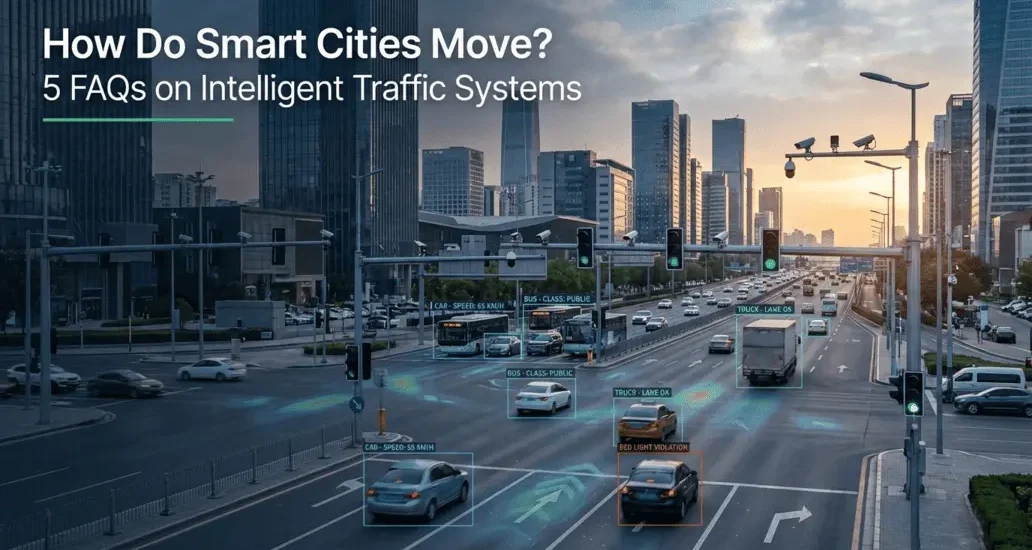
Countries are moving toward smart cities, and intelligent traffic systems have already been adopted in many cities and capitals such as Riyadh, Saudi Arabia, Dubai, UAE, and others. This shift occurs because congestion costs urban economies billions annually through:
- Lost productivity
- Wasted fuel
- Environmental damage
- Infrastructure strain
City planners and transportation managers face increasing pressure to optimize existing road networks rather than simply building additional lanes that fill with traffic within months of completion. From this point, intelligent traffic systems emerge to address all smart urban city challenges through AI-powered video analytics, such as solutions from AvidBeam Technologies, which process visual data from existing surveillance cameras to detect violations, measure traffic density, identify incidents, and improve flow across road networks.
Key FAQs About Intelligent Traffic Systems
Before adopting any modern system, understanding it is essential to evaluate the technology and the advantages it brings to the table. Therefore, these are the most common questions people search for on Google regarding intelligent traffic systems:
1. What is an Intelligent Traffic Management System?
Intelligent traffic management systems apply artificial intelligence and computer vision algorithms to video streams (from surveillance cameras) to:
- Automatically detect vehicles
- Identify traffic violations
- Measure flow
- Recognize incidents across road networks
What makes this technology distinctive is that it works on existing camera infrastructure (no need to replace cameras and waste thousands of dollars) to extract operational intelligence that informs decisions for optimizing traffic signals and infrastructure planning.
Core Components of Intelligent Traffic Systems
Camera networks positioned at intersections, highway corridors, parking facilities, and strategic monitoring points capture visual data (video) across coverage areas. Then intelligent traffic systems analyze these feeds through server-based processing and can detect (simultaneously):
- License plates and vehicle identification
- Traffic violations, identifying illegal parking, wrong-way driving, lane-changing violations, and signal violations
- Vehicle counts, measuring traffic volumes across time periods
- Speed, identifying vehicles moving too slowly or stopped inappropriately
- Incidents, recognizing accidents, disabled vehicles, or debris requiring response
Alert systems then notify traffic operations centers and operators when algorithms identify events requiring intervention.
| AvidBeam has implemented its intelligent solutions in major institutions in Egypt and Saudi Arabia. You can learn all the details and how your institution can benefit through a free consultation session with the company’s experts – Fill out the form HERE. |
2. How Does an Intelligent Transportation System Work?
Intelligent transportation systems implement multi-stage processing that converts raw video footage into traffic intelligence supporting operational decisions and automated responses, serving smart cities through:
A) Vehicle Detection and Classification
Computer vision algorithms identify vehicles appearing in camera fields of view. Then the intelligent traffic system classifies detected objects as cars, trucks, buses, motorcycles, or bicycles, analyzing size, shape, and movement patterns. AvidBeam‘s intelligent transportation systems also recognize license plates efficiently even at highway speeds despite motion blur, challenging lighting conditions, or angled camera positions. It also understands Arabic and English characters as they are trained on regional plate formats.
B) Traffic Flow Measurement
The intelligent traffic system tracks vehicles across video frames to measure movement speeds, lane occupancy, and traffic density. Historical data then creates baseline flow patterns for different times and days, and the system compares current measurements against these (recorded) baselines to identify developing congestion before traffic jams form.
C) Violation Detection
Intelligent traffic systems identify violations through rule-based analysis. For example:
- Traffic signal violations trigger when vehicles cross stop lines during red signal phases
- Wrong-way detection identifies vehicles moving against designated directional flows
- Lane-switching violations occur when vehicles change lanes across solid lines or enter prohibited lanes
- Mobile phone use detection and seatbelt non-compliance are supported
D) Alert Generation and Response
When detection algorithms identify events requiring intervention, intelligent traffic system generates notifications across multiple channels to alert traffic operations center staff for immediate response.
Learn more about: AI-Powered Traffic Monitoring
3. Why Are Intelligent Transportation Systems Important?
Intelligent transportation systems provide economic benefits and return on investment (ROI), alongside core operational benefits that appear in:
A) Congestion Reduction
Traffic monitoring using intelligent video analysis solutions enables dynamic adjustments to signal timing based on actual demand rather than fixed schedules. They measure approach volumes at intersections and adjust green phase duration to clear congested directions, and accelerate incident detection thereby preventing bottlenecks.
B) Enhanced Safety
The violation detection feature in intelligent traffic systems supports enforcement that modifies driver behavior over time. Red-light running decreases when drivers know cameras monitor intersections, wrong-way driving incidents decline through immediate detection and law enforcement notification, and mobile phone use while driving reduces as awareness of detection capabilities spreads.
Similarly, identifying slow or stopped vehicles helps traffic managers respond to hazards before accidents occur, as intelligent traffic system identifies vehicles moving at speeds significantly below speed limits.
C) Data-Driven Planning
Thanks to traffic volume measurements, city operators can make informed infrastructure in vestment decisions. For example:
- Municipalities identify corridors requiring capacity expansion based on actual usage patterns rather than anticipated demand
- Intersection modifications receive priority according to measured congestion severity
- Bicycle lane and pedestrian crossing placement reflect observed usage patterns
Learn more about: Intelligent Video Analytics
4. What Are the Impacts of Intelligent Transportation Systems?
Cities/institutions adopting intelligent transportation systems witness operational improvements and economic benefits, including:
- Improved traffic flow, reduced wait times, and accelerated incident management thanks to rapid detection and response
- Enforcement efficiency as automated violation detection allows officers to focus on response activities rather than fixed monitoring positions
- Reduced congestion lowers vehicle emissions and fuel consumption, improving environmental footprint
- Congestion reduction delivers economic value through reduced travel times, lower fuel consumption, decreased vehicle operating costs, as well as improved safety, effective law enforcement, and uninterrupted operational processes
5. What is the Most Efficient Intelligent Traffic System?
Efficiency evaluation in intelligent traffic systems depends on:
- Integration capabilities
- Analytics depth
- Deployment flexibility
In the four previous points, AvidBeam’s AvidAuto suite excels, offering intelligent traffic system capabilities through three integrated products:
A) AB – Vehicle Analytics
The platform provides license plate recognition (LPR) capability, identifies vehicles and classifies registration types, and generates statistical reports showing traffic flow patterns daily, weekly, and monthly. Watchlist management also enables creating allow lists, deny lists, and VIP lists that trigger automatic alerts.
B) AB – Intelligent Traffic Systems
The platform enables real-time traffic monitoring and flow optimization, detects traffic signal violations and identifies vehicles crossing intersections illegally. It also monitors wrong-way movement, capturing vehicles moving against designated flows, and detects lane changing, issuing alerts when vehicles enter prohibited zones.
The platform supports:
- Mobile phone use violation detection
- Seatbelt non-compliance
- Identifying slow or stopped vehicles causing potential hazards in traffic flow
- The “Vehicle Traffic Density & Analytics Dashboard” provides detailed insights into traffic patterns through analytics on vehicle color distribution, make, and brand
C) AB – Smart Parking
The platform automates parking space detection and occupancy monitoring (showing occupied versus empty spaces across facilities), detects entrance and exit blockages at access points, and issues alerts for double parking.
Regarding integration and deployment, AvidAuto platforms integrate with video management systems including Milestone and Genetec through ONVIF-compliant protocols. Deployment options accommodate different institutional requirements through on-premise servers, private cloud hosting, public cloud platforms, or hybrid configurations.
Also you can learn more about: Auto Detection