
AI Technology in Video Analytics: 15 Questions & Answers
- August 31, 2025
- Posted by:
- Categories: Articles, Articles & Blogs
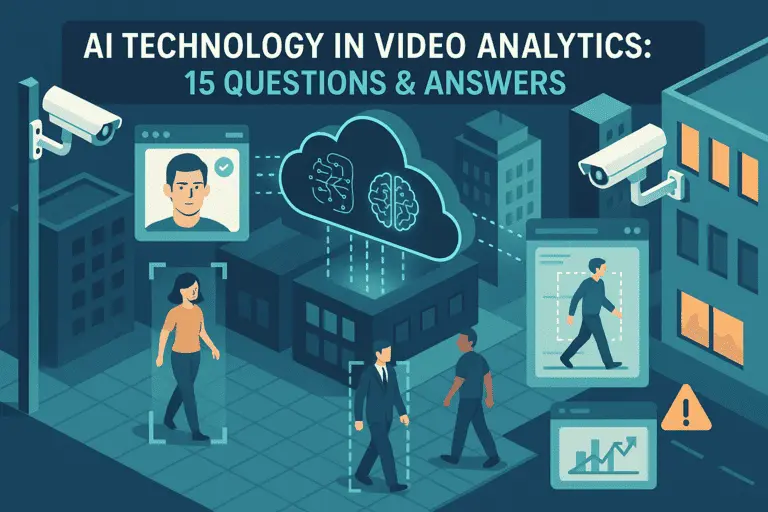
Artificial intelligence (AI) technology is transforming our lives in every aspect, and GenAI tools are changing the rules. This technology is transforming everything from generating images and videos with the click of a button to assisting in the most complex surgical procedures. Its combination with server-based video analytics systems is equally important, as it revolutionizes how organizations monitor their spaces, enabling them to analyze visual data and take appropriate action.
When AI technology is combined with advanced video analytics solutions from experienced companies like AvidBeam, the results are beyond expectations. Therefore, this guide brings together the most frequently asked questions about how AI technology is reshaping the field of visual intelligence and video analytics.
AI Technology and Video Analytics Fundamentals
Let’s understand the basic principles that make AI technology coupled with video analytics solutions so valuable.
What is AI technology? How does it apply to video analysis?
Artificial intelligence represents computational systems that learn, analyze, and generate insights from data patterns. When applied to video analysis, the systems transform static camera recordings into intelligent information sources, then video analytics platforms understand context, recognize patterns, and provide actionable intelligence in real-time.
Also you can learn more about: Video Analysis AI
What market potential does AI technology hold in video analytics?
According to Precedence Research, the video analytics sector is projected to reach $94.56 billion by 2034. Meanwhile, Bloomberg estimates the generative artificial intelligence (GenAI) market will hit $1.3 trillion by 2032. These figures demonstrate the economic impact of intelligent technology integration across industries.
Why does generative AI technology enhance traditional video analytics?
Generative artificial intelligence goes beyond simple pattern recognition. For instance, it can search video segments for specific content, extract key information summaries, and analyze emotional context. AI video analytics platforms generate predictive insights based on observed patterns, creating comprehensive awareness rather than basic detection.
What technical processes enable AI technology to analyze video content effectively?
Intelligent video analytics systems use several technologies to effectively analyze videos. These technologies include:
- Computer vision to interpret visual data.
- Machine learning algorithms to identify patterns (using large-scale language models).
What is the step-by-step workflow of AI technology in video analytics?
The process of AI technology in video analytics involves 4 key phases that work sequentially:
- Data preparation converts video into AI-compatible formats.
- Feature extraction identifies important elements like people and objects in each frame.
- Pattern identification establishes relationships between elements across multiple frames.
- Generative models create comprehensive summaries and actionable insights.
AI Technology in Video Analytics and Industry Applications
AI video analytics solutions are changing operations and decision-making processes in each and every sector. Here are some applications that demonstrate the impact of AI-powered video analytics:
How does AI technology improve retail operations?
AI video analytics systems enable retailers to analyze customer movement patterns, product interactions, and shopping behaviors to help optimize store layouts and improve staff performance evaluation. It manages queue systems more effectively, reduces theft incidents, and conducts detailed demographic analysis.
What role does AI technology play in smart city development?
Municipal video analytics solutions powered by artificial intelligence (AI) monitor traffic flows and predict congestion patterns. AvidBeam‘s AvidAuto solution automatically provides insights into traffic patterns from live camera footage, allowing authorities to track vehicles, detect various forms of traffic violations, boost traffic flow, maintain compliance, improve public safety, and create more regulated traffic environments.
What makes intelligent surveillance systems powered by AI technology different?
Modern video analytics solutions create interactive security assistants that instantly detect threats while explaining incidents in human-like communication. For example, AvidGuard represents an intelligent surveillance solution that detects intrusion, crowds, abandoned objects, and fires with real-time alerting capabilities and contextual analysis. The server-based platforms allow conversational queries about live footage, enabling operators to ask specific questions. They receive immediate, contextually-aware responses that enhance decision-making capabilities.
How does AI technology enable conversational interaction with video systems?
Intelligent technology systems (like AvidBeam systems, which are currently under development) support human-centric interaction models where operators can ask complex contextual queries. They can request specific analyses and seek clarification on detections. The system maintains conversation context, understands implied requests, and provides multi-modal communication combining visual, textual, and verbal reporting.
How does AI technology support banking and financial institutions?
AI video analytics solutions (such as AvidRetail) improve customer experience and safety in banks. They also completely transform operational efficiency by detecting fraudulent activities, monitoring customer flows, analyzing service quality, and measuring performance metrics for each accountant or customer service provider, thus improving overall workflow.
What role does AI technology play in healthcare video analytics?
Intelligent video analytics systems automatically analyze surveillance footage in healthcare facilities to detect security breaches or unauthorized entry into sensitive areas such as quarantine areas or intensive care units. Modern software-based systems, such as AvidBeam solutions, can monitor patient flow and potential bottlenecks, staff behavior, the quality of medical care provided, and compliance with healthcare protocols.
What conversational AI technology features are being developed for video analytics?
AvidBeam GenAI (coming soon, as they are currently being developed) will include dynamic dialogue capabilities that maintain the conversation’s context across multiple queries. Modern systems, coupled with AI technology, understand implicit requests, provide seamless multi-modal communication, and can handle complex questions about specific incidents, providing detailed, context-aware explanations that enhance operator understanding.
For example: Show me the vehicle’s route before the incident, check for similar safety violations last week, or explain why this was flagged as suspicious? The system will immediately respond with a comprehensive answer that notes, explains, and analyzes.
What advanced detection capabilities does AI technology offer for industrial safety?
Artificial intelligence video analytics systems provide comprehensive safety monitoring, including gas leak detection, anomaly detection, fire and smoke identification, left object detection and equipment misuse detection. For example, AvidGuard solution verifies personal protective equipment (PPE) compliance and can pinpoint exact locations of violations and provide contextual insights about safety incidents immediately.
AvidGuard features also include:
- Traffic violations
- Crowd detection
- Suspicious object detection
- Smoke & fire detection
- Face mask detection
- Disconnected camera alert
- Detailed reporting formats
How does AI technology handle multi-camera coordination and analysis?
Server-based intelligent video analytics systems can process streams from multiple cameras simultaneously, correlating events across different perspectives and locations. This enables comprehensive monitoring of large facilities and tracking of individuals or vehicles across multiple areas.
What future developments can we expect from AI technology in video analytics?
AI technology promises more sophisticated behavioral prediction capabilities, integrated with video surveillance and analytics systems. Organizations and entities will soon be able to recognize customer emotions, not just understand their behavior. However, with significant advancements, challenges inevitably increase, and concerns about privacy and data protection arise, to which technology companies like AvidBeam are committed to transparency.
Also you can learn more about: Intelligent Video Analytics Solutions