lpr data analytics solutions: Prove Reliability Before You Buy
LPR (License Plate Recognition) data analytics solutions convert captured vehicle plate information into machine-readable text and support workflows for delivering and reviewing vehicle records.
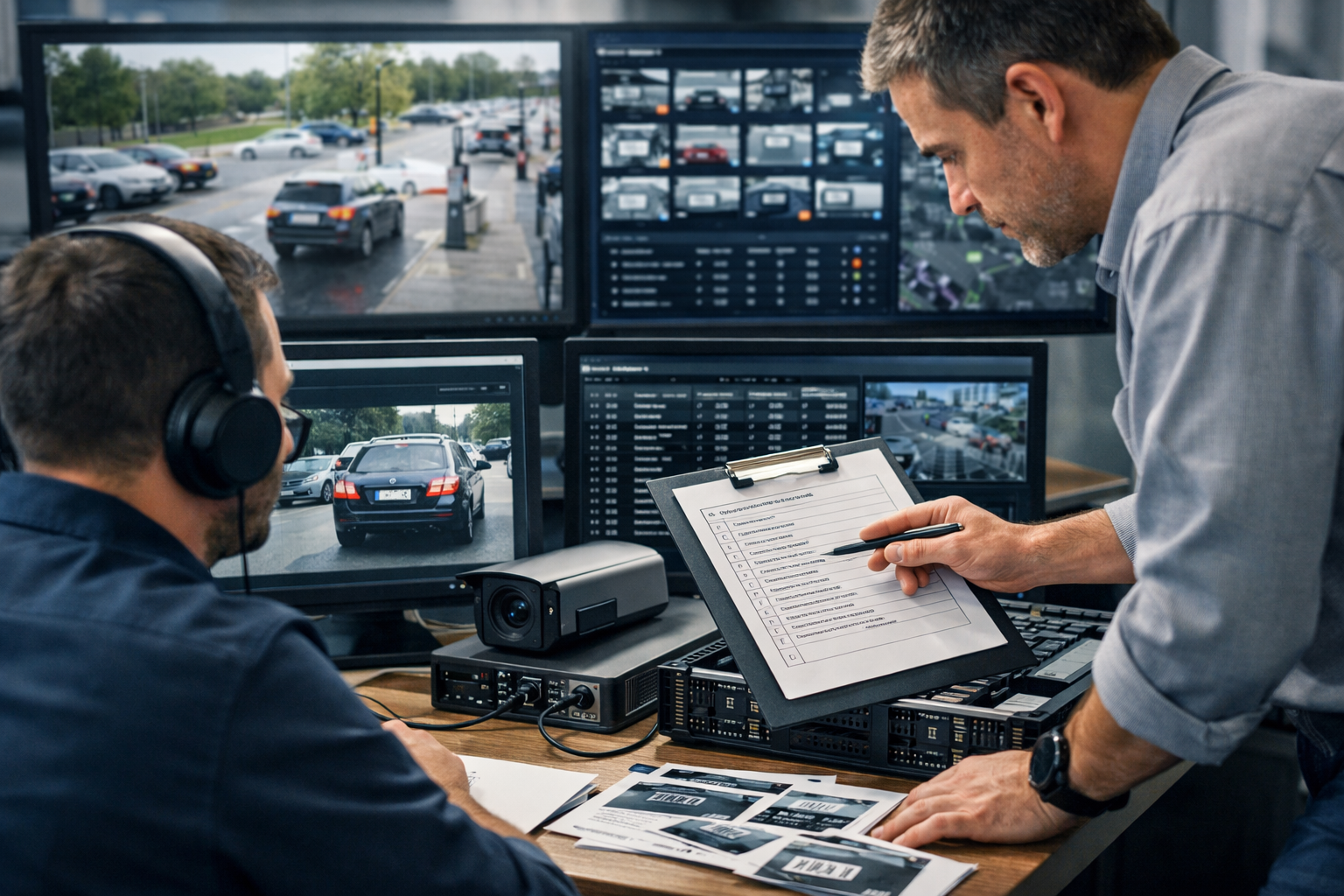
| What are lpr data analytics solutions?LPR (License Plate Recognition) data analytics solutions convert captured vehicle plate information into machine-readable text and support workflows for delivering and reviewing vehicle records. Recognition runs within a camera or on a server receiving camera images, with outputs passed to a receiving system for operator review. Evaluating these solutions requires checking image capture, exact plate matching, event delivery, and completion of the agreed action separately. A controlled pilot helps you identify missing records, review difficulties, and untested recovery capabilities before deciding whether the proposed arrangement meets your purchasing requirements. |
Evaluating lpr data analytics (License Plate Recognition) solutions means proving more than a successful plate read on a demonstration screen. Security, IT, and facilities teams need to know whether everyday vehicle passages become reliable records that staff can review and use.
This guide shows how to compare camera-based and server-based processing through a controlled pilot. It separates image capture, recognition, event delivery, and operator review, so purchasing decisions reflect the tested workflow—not a single accuracy claim. Set acceptance criteria before testing and keep untested capabilities visible.
What should an LPR pilot actually prove?
A pilot should demonstrate the complete operational chain:
Vehicle passage → captured image → plate read → delivered event → reviewed action.
License plate recognition (LPR) converts captured plate information into machine-readable text. A correct read alone does not prove that the receiving system stored it or that staff could act on it.
Map the license plate recognition workflow to your intended task. Define where the pilot ends: finding a searchable record, acknowledging an alert, or completing another agreed action. Assign responsibility for each handoff and retain evidence showing where any failure occurred.
How can you compare camera and server processing fairly?
Camera-based processing performs recognition within the camera; server-based processing analyzes images received from a camera. Compare the complete proposed arrangements against the same operational task, rather than assuming processing location explains every difference.
| Dimension | Camera-based processing | Server-based processing |
| Capture conditions | Agreed lane, lighting, and movement | Matched conditions where practical |
| Image input | Internal input; export availability recorded | Received stream; resolution and compression recorded |
| Recognition settings | Plate formats and filtering rules | Matched formats and rules where supported |
| Processing resources | Camera model and firmware | Server resources and software version |
| Event destinations | Agreed receiver and required fields | Same receiver and required fields |
| Connectivity | Camera-to-receiver path | Camera-to-server-to-receiver path |
| Reporting | Passage, read, and delivery records | Equivalent evidence where available |
Hold placement, vehicle movements, plate mix, and lighting consistent where feasible. Use shared footage only if both arrangements support that test method; identical inputs may not be technically possible.
If different cameras are necessary, label the results as a comparison of complete systems—not recognition engines alone. Record exposure, resolution, frame rate, compression, versions, and network paths. Keep baseline results separate from tuned results, and retest affected conditions after material changes.
How should you measure capture and recognition separately?
Capture coverage
Start with an independent record of observed vehicle passages. Define a usable capture as an image in which a reviewer can distinguish the plate characters under the agreed review method.
Capture coverage is passages with a confirmed usable image divided by all observed, in-scope passages. Count each passage once, regardless of image count. Keep genuine repeat passages separate and identify repeat vehicles so they do not conceal limited test variety.
Include representative plate formats, changing light, movement, and obscured plates. Define exclusions beforehand; do not remove difficult cases after seeing results.
Exact plate matching
Ground truth is the independently verified plate text used for scoring. Establish it without relying on the system’s prediction, and record how disagreements are resolved.
Recognition accuracy is exact matches divided by usable passage captures with verified ground truth. Agree how formatting is normalized without changing plate characters. Near matches are not exact matches.
When several reads belong to one passage, designate the scored output beforehand—for example, the result submitted to the receiving system. Do not select whichever candidate looks best afterward. Count no output as no read, and report additional incorrect outputs separately.
Reviewable exceptions
Also report confirmed exact reads divided by all observed passages. This is a confirmed-success yield, not a confirmed-failure rate. Show unresolved-reference and unresolved-capture counts beside every affected measure; exclude uncertain references from recognition accuracy without hiding their passages elsewhere.
For example, a passage without a usable image affects capture coverage but stays outside the recognition denominator. A usable image with an incorrect result fails recognition. A correct read missing at the destination passes recognition but fails delivery.
Retain passage identifiers, timestamps, available images, outputs, conditions, and review decisions under agreed access, retention, and deletion rules.
Do correct reads reach the systems and people that need them?
Trace confirmed reads from the recognition output through the receiving system to operator review. A successful send message is not proof that the destination accepted the event.
• Identifiers: Match passage, camera or lane, plate, and event identifiers across systems; record how identifiers change.
• Timestamps: Distinguish passage, recognition, receipt, and review times where available. Check clock alignment and time zones.
• Duplicates: Test repeated delivery of one event separately from legitimate repeat vehicle passages.
• Missing records: Reconcile source outputs with received records and investigate unmatched events.
Ask an operator to find the event, inspect its supporting context, and complete the agreed action without vendor assistance. Record missing images, unclear location information, or unavailable review steps.
This connects testing to turning vehicle data into operational intelligence. Report passages that complete the full agreed workflow against all observed, in-scope passages, keeping unresolved cases distinct from confirmed failures.
What happens when connectivity, processing, or review fails?
Plan controlled interruption tests with security, IT, operations, and the supplier. Define stop conditions, restoration responsibilities, and safeguards for live access controls and emergency routes. Use an isolated environment where practical.
Track identifiable passages before, during, and after each interruption.
• Connectivity loss: If buffering is offered, verify where events wait, storage limits, and whether delivery resumes automatically.
• Processing interruption: Determine whether missed activity can be recovered or remains a permanent gap.
• Reconnection: Check delayed events, missing records, duplicate deliveries, and whether old activity is distinguishable from current activity.
• Review failure: Confirm who receives warnings and what happens when the assigned reviewer is unavailable.
Define a manual fallback that preserves access policies. Mark recovery capabilities as demonstrated, failed, or awaiting confirmation; neither architecture guarantees automatic recovery. Assign an investigation owner and repeat affected tests after fixes, including checks of normal operation.
What evidence supports a go, revise, or stop decision?
Create a sign-off record for each tested arrangement. Make it reusable by including:
• Requirement and conditions: State the workflow, configuration, test conditions, and acceptance criterion agreed before testing.
• Result and evidence: Record observed counts, denominators, unresolved cases, and references to images, logs, or reviewed records.
• Open issues: Identify exceptions, untested capabilities, dependencies, and the owner responsible for each resolution.
• Approval and retesting: Name the acceptance owner, required reviewers, changes needed, and conditions that must be repeated.
Use these questions to ask an LPR vendor to identify remaining gaps. Supplier explanations should not substitute for test evidence.
Choose go when the tested workflow meets agreed criteria. Choose revise when defined gaps require correction and retesting. Choose stop when a critical requirement remains unmet without an acceptable resolution.
Frequently asked questions
What is a correct plate read?
The designated result exactly matches the independently verified plate identifier, using formatting rules agreed before testing. Partial matches do not qualify.
Should unreadable captures count separately?
Yes. Keep them visible in observed passages and capture results, but outside recognition accuracy based on usable images with verified references.
Can vendors be compared using different cameras?
Yes, as complete system arrangements. Document hardware and configuration differences; do not attribute every outcome to processing location.
How should duplicate events be tested?
Repeat delivery of the same event, then test a separate passage by the same vehicle. Check that duplicate handling neither creates extra actions nor hides legitimate visits.
What should happen after a network interruption?
The agreed recovery procedure should be demonstrated. Verify reconnection, missing-event visibility, and buffering or delayed delivery where offered; do not assume these features exist.
Who should approve the pilot results before purchase?
The designated acceptance owner should sign after relevant operations, security, IT, and integration reviews. Procurement should receive the findings and unresolved dependencies.
Plan your pilot with AvidBeam
Bring your site conditions, receiving-system requirements, and acceptance checklist to a discussion with AvidBeam about its automotive analytics platform. Ask which parts of your proposed workflow can be demonstrated.
 Article
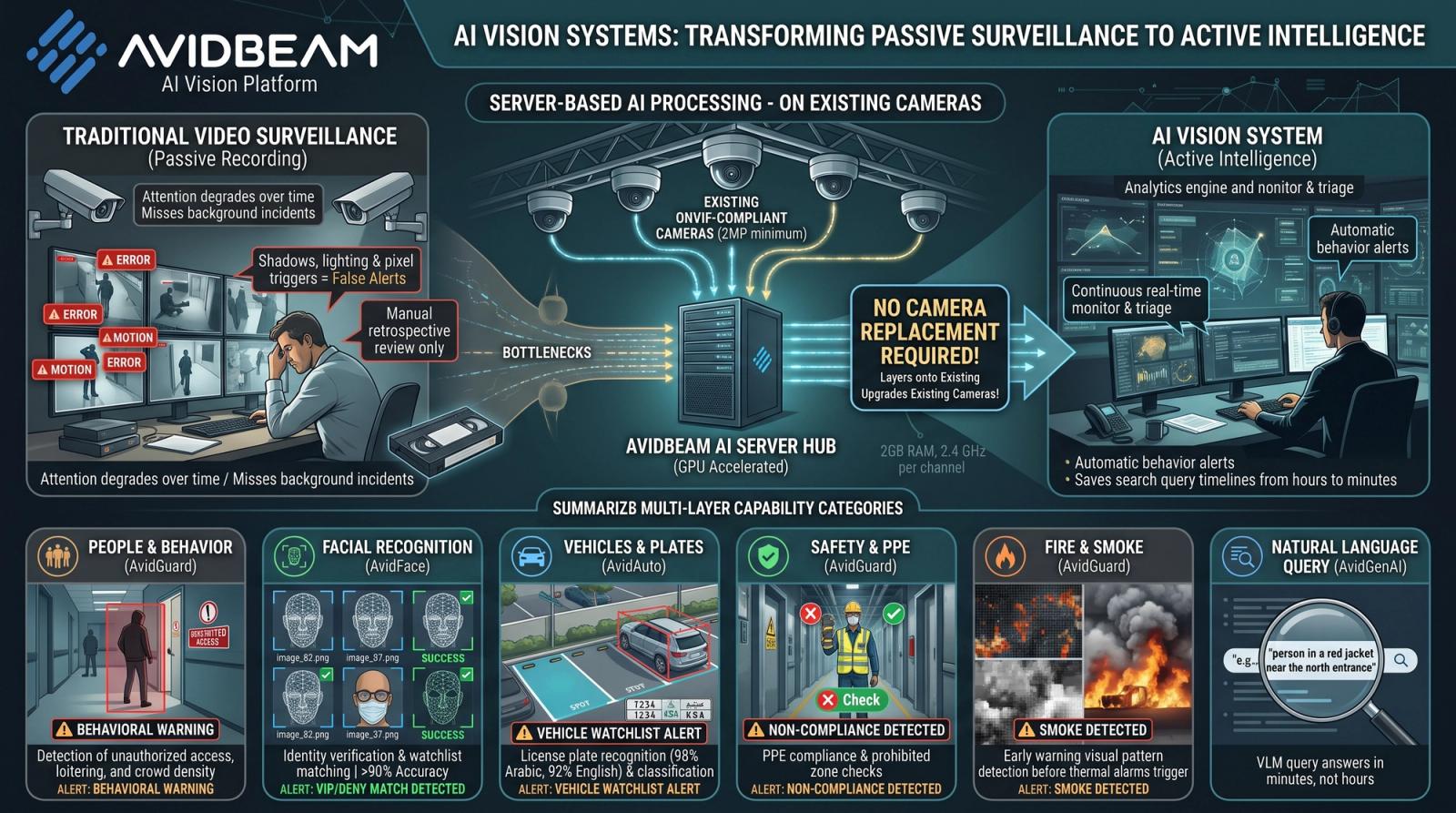
AI Vision System: What It Detects and How It Works | Avidbeam
Standard cameras record. An AI vision system interprets. That distinction drives the entire shift from passive surveillance to active intelligence, and it explains why organizations across security, retail and transportation
 Article
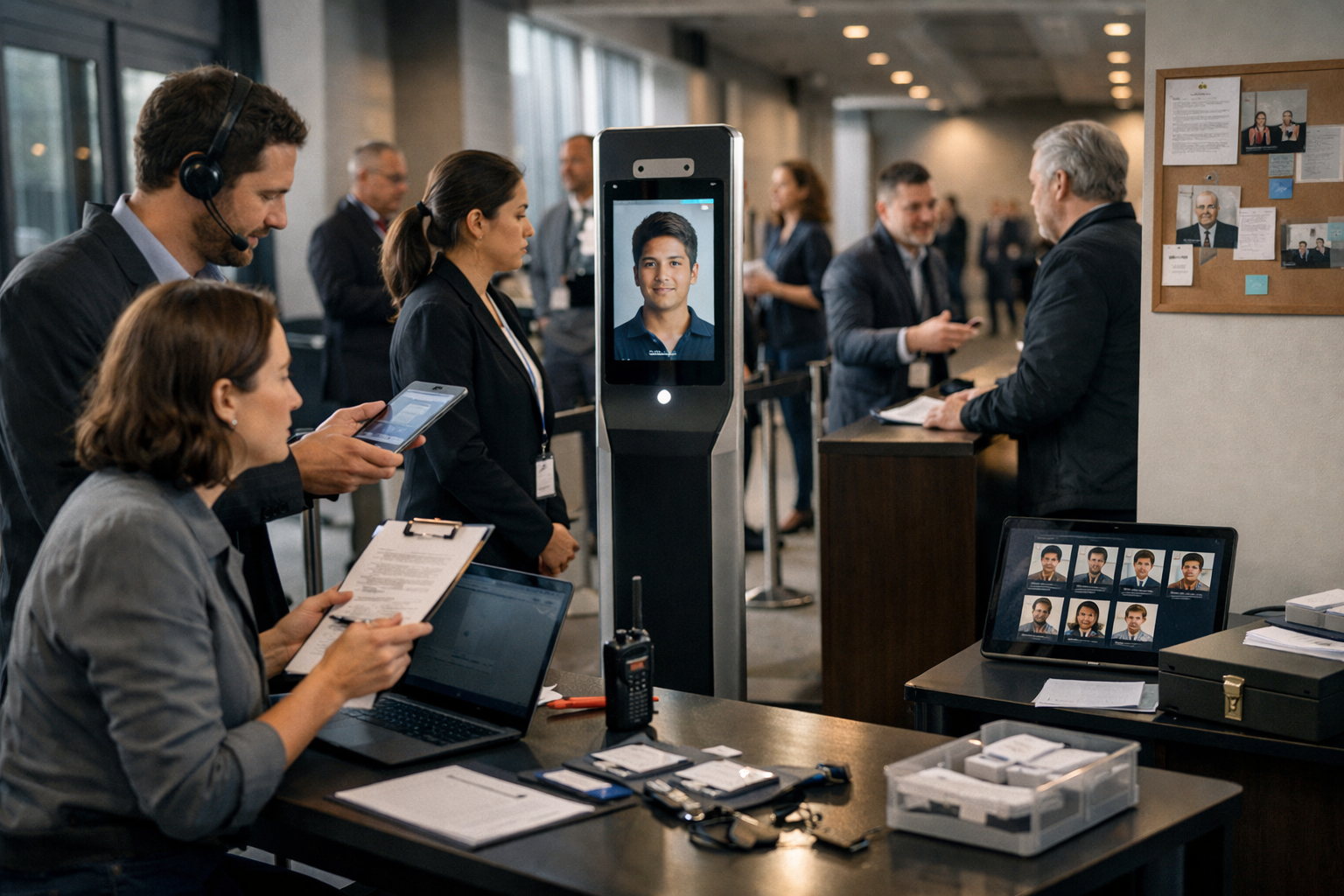
Face Registration: Plan a Practical Event Check-In Workflow - Avidbeam
Face registration is biometric enrollment: collecting facial information to create a reference for later comparison. For event organizers, the challenge is fitting that step into ticketing, attendee communications, and arrival-day operations without leaving staff or participants unsure what happens next.
 Article
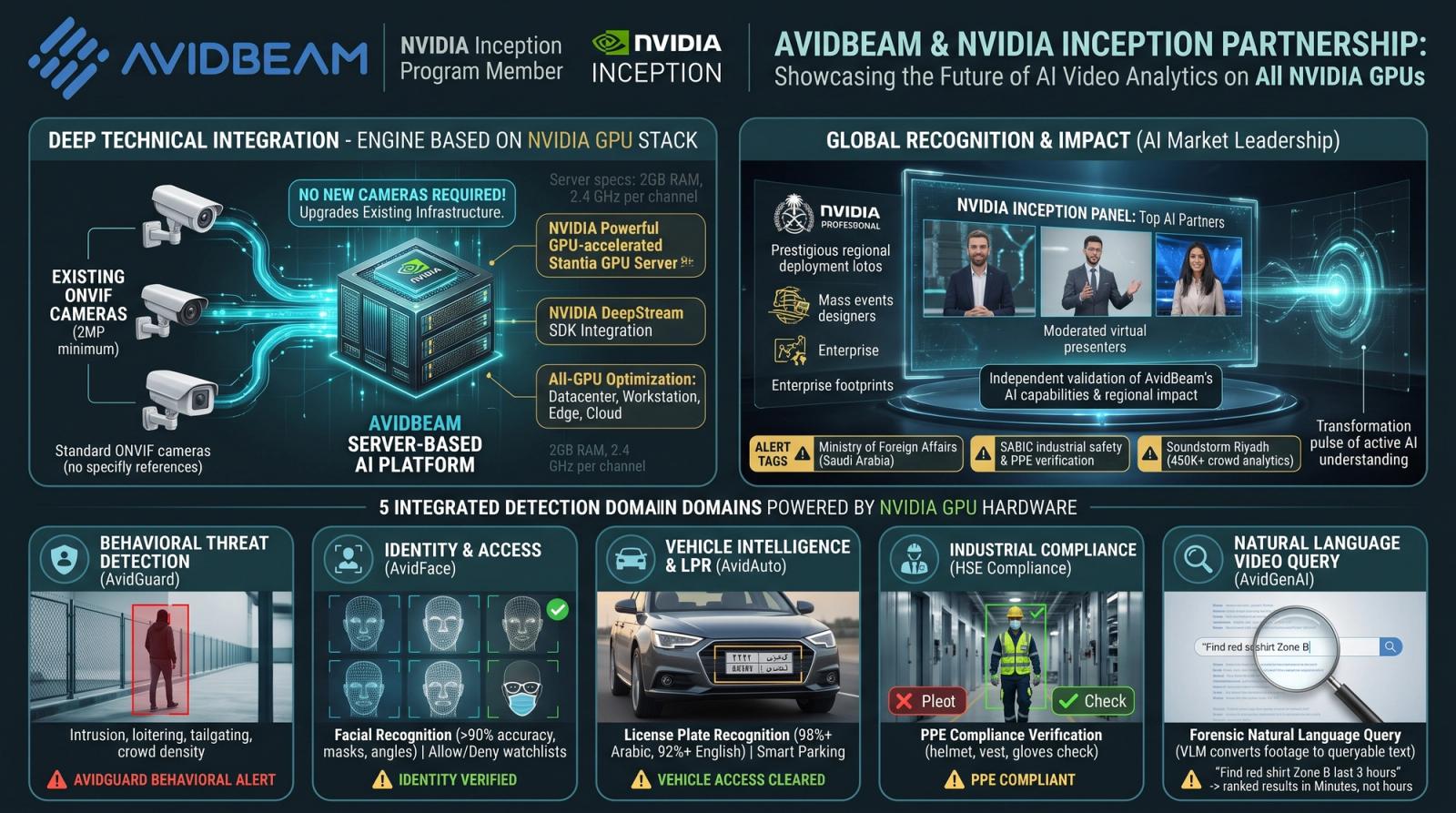
AvidBeam and NVIDIA: An Inception Partnership Built on Full GPU Compatibility and Regional Leadership
The NVIDIA Inception program is a global initiative that supports and recognizes AI companies building products and services on NVIDIA technology.
Experience AI Video Analytics
on your existing cameras.
Start with a pilot deployment and scale seamlessly as your operational requirements evolve.